successor to Shock and Awe whose feed no longer seems to be working properly - original blog + archive remains here: http://shockandawesimonreynolds.blogspot.com/ ^^^^^^^^^^^^^^^^ the blog of the Simon Reynolds book about glam and artpop of the 1970s and its aftershocks and reflections to this day
Came across this snippet from Kevin Rowland's The Q & A in The Guradian a few weeks back (Kev promoting his memoir Bless Me Father):
If you could edit your past, what would you change?
I’d have stuck with the original Dexys Midnight Runners look we started in 1978, which became known as the New Romantic look a couple of years later. Our management and record label talked us out of it. Later, Duran Duran and Spandau came out with that look and that made us look old-fashioned.
So 'tis proven!
What is proven? you ask.
The argument of this old post:
Back when I was reading old Dexys Midnight Runners interviews for Rip It Up, I came across a passing reference to how before punk, Kevin Rowland had been into Bowie.
Well, who wasn't, out of that punk-into-postpunk generation?
Still, it surprised me somehow - Rowland being so into Truth and Soul(-baring) and Authenticity, how could he really have any time for someone bound up with artfice and the Pose - with the idea that the performer is an actor?
Then the other day I discovered that Rowland's very first group Lucy & the Lovers had been influenced by Roxy Music.
(In fact, in '83, onstage, Rowland slagged off Bowie-circa-Let's Dance as a bad copy of Bryan Ferry).
The glam connection starts to make sense, if you think about Dexys's serial reinvention - how each successive album involved a New Look.
And it really starts to make sense if you consider subsequent developments.
Video for "Rag Doll" - single off the 2020 rerelease of My Beauty - featuring Rowland's grandson, Roo – “who has been wearing dresses since he was 13”. The song is by the Four Seasons’ as in "Walk Like A Man".
Cheeky glimpse of suspenders here
The My Beauty move seemed to involve Rowland revealing - and reveling in - his own long-suppressed feminine side.... asserting publicly his right to softness and the wearing of "pretty things".
While still remaining a man, and a hetero man for that matter.
Here's what he wrote to Alan McGee about the album and what he was trying to do
He has headed stationery!
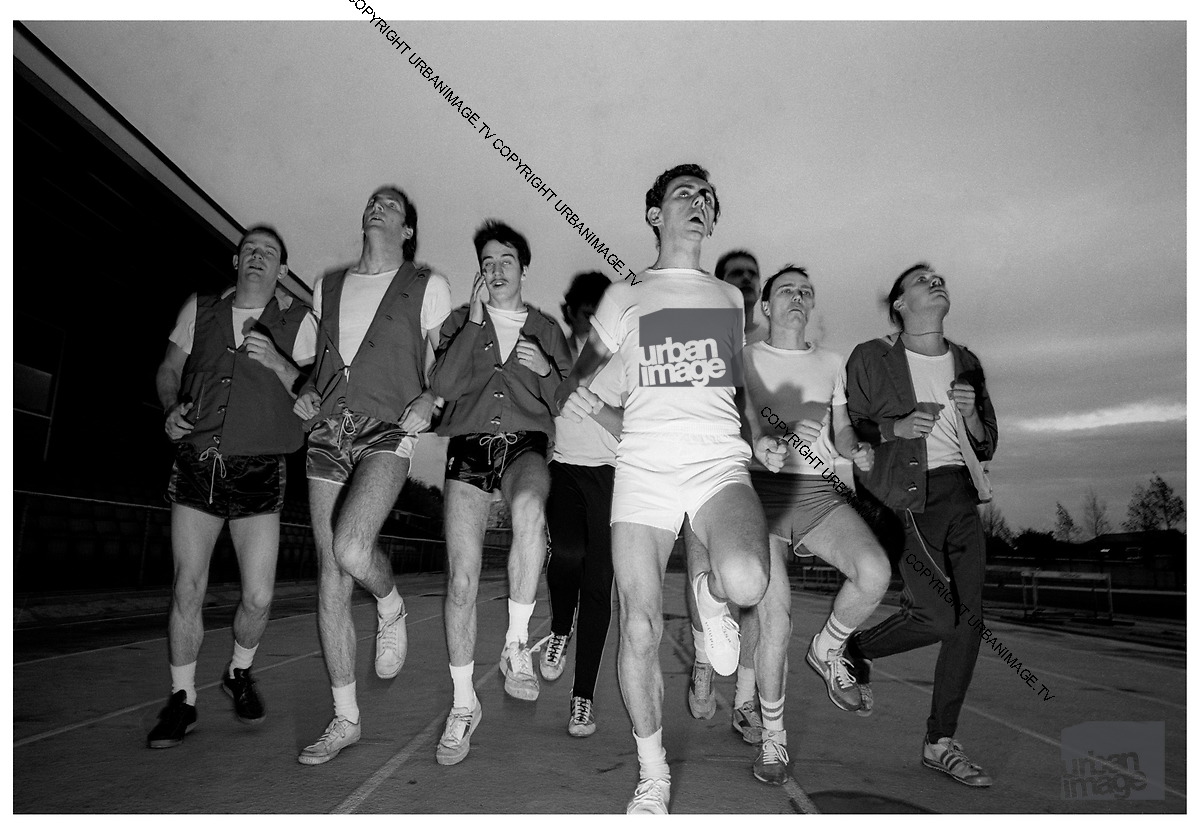
It's a striking switch-up especially c.f. the first-phase Dexys look, which was so butch - the "spiffy" Mean Streets / On the Waterfront gear, followed later by boxing training hoods that created a vaguely monastic look.... the cult of Intense Emotions... "punish my body until I believe in my soul"... the working out together, jogging en masse to create team spirit ... . the missionary zeal... the thematics of fire and fortitude ("Dance Stance", "Burn It Down")... the fixation on the harder, horn-pumped type of Sixties Soul... the jousting jabbing horns
Such grave, earnest young men - so uncamp, it goes all the way round to become camp
Another glam-echoing thing about My Beauty - it's a covers album, in the tradition of Pinups and These Foolish Things. An artist explaining himself through choices of others material and through the delivery. Although in this case, it's not an inventory of influences or pantheon of ancestors, so much as an emotional accounting, a "this is where I am now" / "this is who I've always been inside" unveiling.
The other "glam" syndrome at work here is that irony that holds both generally and applies in this specific case with Dexys - which is that the clothes age faster and far worse than the music does.
Mind you, some of the recent get-ups looked awful from the off.
Like, what's he going for here?
The cover of this most recent album The Feminine Divine is a catastrophic taste failure - this looks more like a Goa Trance flyer or compilation than something you'd associate with Dexys Midnight Runners
Psytrance imagery actually makes sense as Kev in recent years got into Tao and tai chi and went on a retreat to Thailand to get his head sorted
"It’s Alright, Kevin (Manhood 2023)"... sees the singer in a lively therapy session with his backing chorus: “Were you always feeling edgy?” they wonder.
“Yes,” he admits.
“Afraid the mask would slip and they’d see?”
“I carried so much weight on me / I never truly was myself / Just an amalgam off the shelf …
“And did you ever get found out?”
“All the time”
“Did that compound your sense of doubt?”
“Totally. It was so hard not being real /Let me tell you how for years / I was waking up in fear / What would they think of me, no personality? / A no one from the start …”
The album is a kind of pilgrim’s progress, in which a character not a million miles from our Kev confronts the controlling habits of his earlier masculinity – “I had so much hate in me” – in order to celebrate not only his own freer, feminine side, but the guiding female spirit of the universe.....
. “I think we are going through a big change,” Rowland says, “different ways of relating. And we can either be entrenched in our old views – ‘I’m not bloody changing’ – or we can go with it…”
Oh and looping back to where we started
"Rowland tells a poignant story from the time about how he couldn’t quite bring himself to say hello to Bryan Ferry when he had the chance.
“I stood next to him once in the studio,” he says, “We were both recording something and Top of the Pops was on and we both came down to watch it. I was dressed in a scruffy old tracksuit and we didn’t speak – I was always very shy in those kind of situations. And Roxy Music were heroes of ours, if you like. If you listen to the early albums, he is really singing from his soul.”"
SOPHIE's posthumous album SOPHIE is out now on Transgressive and Future Classic - and there's some great stuff on it.
An interesting piece at the New Yorker by Jia Tolentino looking at SOPHIE's career and work in terms of "plasticity"
On "Bipp"
"black space latticed with radically strange objects: a rubbery squelch of a bass beat, a melodic line like a laser coated in latex, percussive punctuation marks that seemed to morph from plasma into steel."
On SOPHIE'S early interviews:
"She’d picked the name Sophie, she said, because it “tastes good and it’s like moisturizer.” Her influences were “shopping, mainly.” She wondered if music could work like a theme-park roller coaster, leaving you nauseated and laughing, then leading you to purchase a key ring."
On SOPHIE'S process:
"Nothing else sounded like Sophie, because she made her sounds from scratch. She didn’t sample; she built each hiss and smack and boom by manipulating raw waveforms. She wanted to get to the “molecular level of a particular sound,” to understand why that sound “behaves a certain way when processed or cooked.”
On SOPHIE's ethos:
"There was a sense that transformation was the point and the teleology; Sophie’s sonic plasticity pointed to interrelational reinvention, toward a truth that had to be formed in the primordial tide pool of a dark, pulsing room...... She had translated her life and her questions into these new sounds, evincing some personal ethic of the transhuman and the trans human, in which states of flux could be captured in digital permanence, in which alteration was how you approached the divine".
^^^^^^^^^^^^^^^^
As I have said before here, if any artist could have had a lengthy entry in the "Aftershocks" section of Shock and Awe, it would be SOPHIE. Below are my thoughts about "Faceshopping" and Oil of Every Pearl's Un-Insides
"Faceshopping" is a digi-glam tour de force.
Here's what I said about the video-single in the infamous C-tronica piece:
"The 2018 song and video works simultaneously as a critique and a celebration of the idea of self-as-brand, drawing inspiration equally from 21st century social media and from the tradition of flamboyant display in ballroom and drag. A digital simulacrum of Sophie’s face—already a stylized mask of makeup—is shattered and reconstituted using computer-animation effects.
Further thoughts:
... What intrigued me about SOPHIE is this collision of extreme exteriority but then still a lingering belief in the idea of interiority.
In interviews, SOPHIE sometimes used the words "authentic" and "authenticity" as positive terms
Some say that the album title Oil of Every Pearl's Un-Insides is intended to be read phonetically - "I love every person's insides"
An idea continued on the album's other single "It's Okay To Cry", which contains the line "I think your inside is your best side"
Again playing on the contradiction between exteriority and interiority: the photographable pose ("your best side") versus deep hidden truth ("your inside").
Between selfie and self.
Tears as a tear in the 2D image presented to the world. The abject inside leaking out.
The Superflat SuperSelf. Surface as Shield. An inscrutable mask.
So there's a tension that is unresolved between the allure of digi-glamour (creating doctored images - selfies or videoworks - and disseminating them for unknown eyes) and a lingering longing to be real, to be unprotected and honestly vulnerable, nakedly pathetic even. Because the truth is always weakness and damage.
That is further enacted in the songs not just thematically but in the sound itself - a combo of super-glistening surface sheen and hyper-contoured sounds versus messy splurges of sound and tearing, shredding percussion....
The immaculate versus maculate (the latter sound-palette evocative of stress, abjection, fragility, torsion).
A sonic dramatization of a fraught mental space caught between the opposed demands of exteriority versus interiority .. expressive also of an unresolved tension between the idea of the self as performative and constructed versus the idea of identity as innate and fated.
"Dramatization" is the word - with the kind of music made by SOPHIE and others, there's a feeling that the music is staged. You don't immerse yourself in the sound, lose yourself in it; you almost look at it. It enthralls you, but you remain external to it, at a distance: watching it as a sonic spectacle. A ceremony.
That's why the phrase "tour de force" feels right. It's hard for me to imagine someone listening to "Faceshopping" in a habitual sort of way. It's too imposing. More like a show, an event to experience rather than something that can accompany everyday activity.
A flagellant pageant of ritual rhythm.
The opening salvo of lyric, as delivered by Cecile Believe -
My face is the front of shop
My face is the real shop front
My shop is the face I front
I'm real when I shop my face
- also makes me think of a book I read for S+A: Erving Goffman’s 1959 study of social life as theatre The Presentation of Self in Everyday Life, in which he formulated concepts like “impression management” and the “personal front.”
The song is a deeply ambivalent commentary on the culture of art-I-fice and self-selling - identity as product.
Today's digi-glamorous Instaglam spaces - a honeycomb hall of mirrors infinity infested by influencers (people paid to be seen - seen with products) - is like a decentralized and democratic version of the royal court. A placeless place to be, a poser's paradise. A festival of facades. (No wonder that the courtly world loved nothing more than a masquerade).
References to pearls and glam(our) inevitably makes me think of this song:
Me on "Mother of Pearl":
"Just as “Every Dream Home” has a religious undertow, “Mother of Pearl” references goddesses and the Holy Grail. But the most significant aspect of the song is the choice of mother of pearl as the trope of perfection (as opposed to diamonds or gold).The subliminal association is with the Virgin Mother: the whole song revolves around the madonna/whore dichotomy. Mother of pearl, also known as nacre, is an iridescent substance generated by particular species of oyster and other slimy mollusks. Nacre is found on the inside of the shell, or on the outer surface of pearls. This pearlescent shimmer-stuff is a real-world analogue for glamour: an optically dazzling patina produced by an abject, formless biological interior. Virtually imperishable, nacre exists right on the edge between the organic and inorganic, the mortal and the deathless. It suggests that there is something life-denying, or least life-freezing, about glamour. Reversing William Blake’s dictum that “exuberance is beauty,” glamour replaces liveliness with a cold, still perfection: the pose, the photograph."
^^^^^^^^^^^^^
Thought for an essay: contrasting Poly Styrene and SOPHIE, 1970s rad-feminism and 2010s xenofeminism, "when I put on my make-up / the pretty little mask's not me" versus "Scalpel, lipstick, gel /action, camera, lights"
Art-I-Ficial
On X-Ray Spex and Poly in S+A:
"Marianne Elliott-Said picked Poly Styrene as her name as a “a
send up of being a pop star... like a little figure, not me... a lightweight
disposable product... that’s what pop stars are meant to be”. There’s an echo
here of Bowie’s “plastic soul” and Ziggy as “plastic rocker”. As is the case with much punk,
glam-turned-inside-out is what you get on the glorious Germfree Adolescents:
tunes like “Art-I-Ficial” cry out with a sort of jubilant bitterness,
Poly unloosing her emptiness vengefully upon a world that has made her
generation inauthentic and soul-less. “Obsessed With You” blasts
advertisers for whom every kid is “just another figure for the sales machine,”
but also the impressionable, moldable kids; “I Am A Cliché”' and “I Am A
Poseur” reflect back at society its own worst nightmare of youth-gone-wrong.
“Let’s Submerge” and “Warrior In Woolworths” lampoon the concepts of rebellion
and the underground on which punk itself is based. “The Day The World Turned
Day-Glo” and “Plastic Bag” are hallucinatory consumer phantasmagorias - “I eat
Kleenex for breakfast and use soft hygienic Weetabix to dry my tears,” “1977
and we are going mad! 1977 and we've seen too many ads!”- like “Virginia
Plain” soured and psychotic.
"Identity is the crisis can't you see..."
^^^^^^^^^^^^^^^^^^^^^^^^^^^^^^
Related fragment:
"Fueled by narcissism, our century’s great motivator, the hipster inflicted himself upon the world by way of his affinities, his special brands of choice. Then we bypassed the middleman and became the brands ourselves. “Life has become a performance, a rather banal and meaningless one. That may have been the case for centuries, but even more so now,” wrote Dean Kissick for Spike Magazine in 2021. “The only thing we can make now is ourselves; day after day, again and again.” Not only is this life of endless bonsai-pruning one’s public-facing persona bleak on its own terms, it also comes at the expense of real and lasting art. Today’s avant-garde make memes or podcasts; they generate discourse; they post."
Back when I was reading old Dexys Midnight Runners interviews for Rip It Up, I came across a passing reference to how before punk, Kevin Rowland had been into Bowie.
Well, who wasn't, out of that punk-into-postpunk generation?
Still, it surprised me somehow - Rowland being so into Truth and Soul(-baring) and Authenticity, how could he really have any time for someone bound up with artfice and the Pose - with the idea that the performer is an actor?
Then the other day I discovered that Rowland's very first group Lucy & the Lovers had been influenced by Roxy Music.
(In fact, in '83, onstage, Rowland slagged off Bowie-circa-Let's Dance as a bad copy of Bryan Ferry).
The glam connection starts to make sense, if you think about Dexys's serial reinvention - how each successive album involved a New Look.
And it really starts to make sense if you consider subsequent developments.
Video for "Rag Doll" - single off the 2020 rerelease of My Beauty - featuring Rowland's grandson, Roo – “who has been wearing dresses since he was 13”. The song is by the Four Seasons’ as in "Walk Like A Man".
Cheeky glimpse of suspenders here
The My Beauty move seemed to involve Rowland revealing - and reveling in - his own long-suppressed feminine side.... asserting publicly his right to softness and the wearing of "pretty things".
While still remaining a man, and a hetero man for that matter.
Here's what he wrote to Alan McGee about the album and what he was trying to do
He has headed stationery!
It's a striking switch-up especially c.f. the first-phase Dexys look, which was so butch - the "spiffy" Mean Streets / On the Waterfront gear, followed later by boxing training hoods that created a vaguely monastic look.... the cult of Intense Emotions... "punish my body until I believe in my soul"... the working out together, jogging en masse to create team spirit ... . the missionary zeal... the thematics of fire and fortitude ("Dance Stance", "Burn It Down")... the fixation on the harder, horn-pumped type of Sixties Soul... the jousting jabbing horns
Such grave, earnest young men - so uncamp, it goes all the way round to become camp
Another glam-echoing thing about My Beauty - it's a covers album, in the tradition of Pinups and These Foolish Things. An artist explaining himself through choices of others material and through the delivery. Although in this case, it's not an inventory of influences or pantheon of ancestors, so much as an emotional accounting, a "this is where I am now" / "this is who I've always been inside" unveiling.
The other "glam" syndrome at work here is that irony that holds both generally and applies in this specific case with Dexys - which is that the clothes age faster and far worse than the music does.
Mind you, some of the recent get-ups looked awful from the off.
Like, what's he going for here?
The cover of this most recent album The Feminine Divine is a catastrophic taste failure - this looks more like a Goa Trance flyer or compilation than something you'd associate with Dexys Midnight Runners
Psytrance imagery actually makes sense as Kev in recent years got into Tao and tai chi and went on a retreat to Thailand to get his head sorted
"It’s Alright, Kevin (Manhood 2023)"... sees the singer in a lively therapy session with his backing chorus: “Were you always feeling edgy?” they wonder.
“Yes,” he admits.
“Afraid the mask would slip and they’d see?”
“I carried so much weight on me / I never truly was myself / Just an amalgam off the shelf …
“And did you ever get found out?”
“All the time”
“Did that compound your sense of doubt?”
“Totally. It was so hard not being real /Let me tell you how for years / I was waking up in fear / What would they think of me, no personality? / A no one from the start …”
The album is a kind of pilgrim’s progress, in which a character not a million miles from our Kev confronts the controlling habits of his earlier masculinity – “I had so much hate in me” – in order to celebrate not only his own freer, feminine side, but the guiding female spirit of the universe.....
. “I think we are going through a big change,” Rowland says, “different ways of relating. And we can either be entrenched in our old views – ‘I’m not bloody changing’ – or we can go with it…”
Oh and looping back to where we started
"Rowland tells a poignant story from the time about how he couldn’t quite bring himself to say hello to Bryan Ferry when he had the chance.
“I stood next to him once in the studio,” he says, “We were both recording something and Top of the Pops was on and we both came down to watch it. I was dressed in a scruffy old tracksuit and we didn’t speak – I was always very shy in those kind of situations. And Roxy Music were heroes of ours, if you like. If you listen to the early albums, he is really singing from his soul.”"
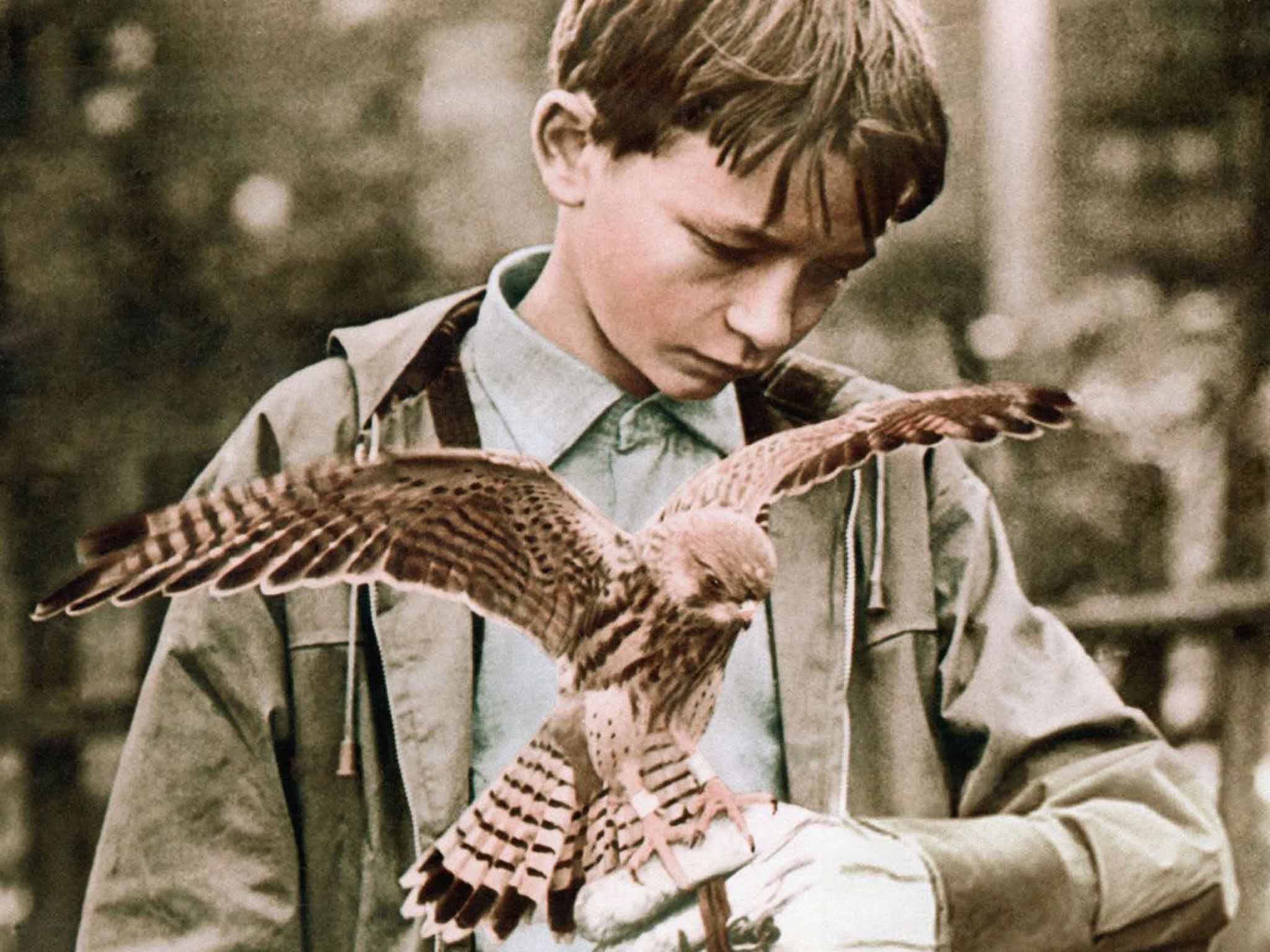
Kes is a film that made a big impression on me as a child. If I recall right, it was in a double bill with the rereleased Fantazia - at any rate, I saw it first on the big screen at our local cinema The Rex, with my mum, and then many times after that on the television.
In my memory, I think of it as a black and white film (well, we did have a black and white TV for the entire '70s) and so it's always startling to see that it's actually colour.
But the black-and-white mind's eye misremembering fits the grey, grim world of the Yorkshire mining town in which the boy Billy lives - and the monochrome movie genre to which Ken Loach's film belongs (Billy Liar, A Taste of Honey, Saturday Night and Sunday Morning, The Loneliness of the Long Distance Runner etc)..
Looking into the story of the the film and of Barry Hines - who wrote the original novel and co-wrote the screenplay - I suddenly thought of another Northern lad with a thing for falcons: Bryan Ferry.
The model on the cover of Avalon is Lucy Helmore - who was a model but was also Ferry's posh young bride. But for the very first time in that long line of lovely ladies on Roxy covers, you can't see her face - that's Bryan's private privilege.
Indeed, c.f. the states of undress in which the Roxy girls hitherto have been exposed to the camera, Helsmore's body is encased protectively (chain-mail?). Not an inch of skin is visible - her hand is covered entirely by a falconer's leather glove.
"The Avalon album cover was shot at dawn, on a lake at Helmore’s parents’ house in Ireland, with Helmore wearing a medieval helmet and carrying a falcon – designed to evoke King Arthur’s journey to Avalon, his final resting place and the mythical land where his sword, Excalibur, was forged" - Jason Draper
And here's his nibs himself, in the "Avalon" promo, brandishing a bird of prey.
Filmed at Mentmore Towers country house
But what's the Kes connection? What bridges the gulf between Hines + Loach's Northern social realism and the aristocratic fantazia of Roxy Music?
Well, those aristocratic fantasies stem from BF's reaction against his background - his dad was a farm worker who then toiled at a coal mine tending the pit ponies and descending with them into the Stygian depths beneath County Durham.
And in Kes, young Billy is soon to leave school aged 15 - although he looks about 12, small and scrawny and half-starved. One scene involves a meeting with the school's employment counsellor, who makes it clear that that the only real option facing someone without qualifications like Billy is the coal face - working in the same mine as his older brother Jud.
Billy is adamant he won't work in the mine. (Bryan F has said that the best advice his dad ever gave him was: "Don't go down the pits, lad"). Hines himself was the son and grandson of coal miners.
The one bright spot in Billy's life (his mother's neglectful, his brother bullies him, the school is like "The Headmaster Ritual" ) is the kestrel he's captured, tamed, and trained.
Wheeling in the sky, she represents transcendence: an aerial, unbound existence - the inverse of the hellish heat and dusty murk of the coal face far below the surface.
Billy's rapt by the raptor, an avian aristocrat.
The film is Kes but the title of the novel is A Kestrel for a Knave, which comes from the fact that in Medieval times a man of common birth was only allowed to keep a kestrel - the more prestigious sorts of hawk were the preserve of the upper crust.
"Falcons have long been considered the most desirable of the falconry birds because of their speed, dash and trainability. The fastest animal on this planet is the peregrine falcon in a headlong dive called a “stoop,” and this species has enjoyed a long history of being flown by aristocrats.
"From highest to lowest, the ranks and their rightful birds are: Emperor – golden eagle; king – gyrfalcon; prince – peregrine falcon; particularly the “falcon gentle” or female peregrine (larger and therefore more desirable than the male); duke – peregrine falcon; earl – peregrine falcon; baron – male peregrine falcon; knight – saker falcon; squire – lanner falcon; noblewoman – merlin; page - hobby; yeoman (member of the landed gentry) – female goshawk; poor man – male goshawk; priest – female Eurasian sparowhawk; holywater clerk (clergy below the rank of priest) – male Eurasian sparrowhawk. Other references add the lowest stratum of society – the “knave” or male servant. He was accorded a bird that, in falconry terms, barely counted – the tiny Eurasian kestrel.
The Eurasian kestrel (Falco tinnunculus), a small falcon the size of a blue jay, was occasionally used by the common people. Its diminutive size meant it was limited to small, uninteresting prey like insects and mice, so nobility scorned it. They especially prized the gyrfalcon, largest of the falcons, and the peregrine, the swiftest. The merlin, no larger than a pigeon, was considered an appropriate noblewoman’s falcon, while the fast but delicate hobby was allotted to the page."
According to the Roxy Music site, Bryan Ferry had done his research - he notes that Helmore "is carrying on her wrist a merlin – the bird of prey favored by lady falconers."
Here's a Ferry on falconry quote from a recent Rolling Stone interview:
"We just thought it went well with the original picture, on the album cover for Avalon — the mist on the lake, this female warrior with her helmet and her falcon. The bird of prey of choice for a female warrior had to be a merlin, which is the small bird of prey. So we had a merlin in that video, which was pretty cool. I called my youngest son Merlin, actually."
Back to the falcony fansite Wingmasters
"Medieval falconers, men and women, used hooded falcons as props. Since the hooded birds, a symbol of the aristocracy, would stand virtually motionless on the falconer’s glove, they could be carried anywhere. Hooded falcons accompanied their noble owners to court, into banqueting halls, even into church....
"Among the lord’s attendants at every residence would be young squires, noblemen’s sons intent on learning the knightly skills of riding, fighting, hunting (large game like wild boar and deer) and hawking.... falconry, thanks to the new Norman aristocrats and the feudal system they imposed on England, had become a pastime of the nobility. It had also become a symbol of nobility. A hooded falcon was now just as much an accoutrement of an aristocrat as a well-bred horse or a sword.
" Falconry became so firmly entrenched in society that by the 1100s even the merchant class of London was aping the nobility and flying “ignoble” hawks -shortwings like the sparowhawk and the goshawk. The “noble” hawks – the longwinged, desirable falcons – were the traditional prerogative of the privileged class because of their flying style and hunting prowess, as well as their beauty."
"Noblemen’s sons" - one thinks inevitably of Ferry's fanatical fox-hunting scions Otis and Isaac. Who make a cameo appearance in S+A:
Outraged by the Labour government’s ban on these
ancient blood-rites of the English aristocracy, Otis - a member of the
Countryside Alliance and joint master of the South Shropshire Hunt – joins a
storming of the House of Commons. There’s a pattern here that causes Bryan’s
boys to be labelled “the feral Ferrys”: two years earlier, Isaac got suspended
from Eton after sending an abusive email to an anti-hunting campaigner. Their
father, meanwhile, continues his drift rightwards, alluding quietly in
interviews to having Conservative political views, in between more lively talk
of wine connoisseurship, pheasant shooting with the Earl of Arundel, and his
growing collection of paintings by the Bloomsbury Group.
Remembered that one of my favorite poems, "The Windhover" by Gerard Manley Hopkins, is inspired by and named after the kestrel in flight (windhover being another name for the bird).
The Windhover
To Christ our Lord
I caught this morning morning's minion, king-
dom of daylight's dauphin, dapple-dawn-drawn Falcon, in his riding
Of the rolling level underneath him steady air, and striding
High there, how he rung upon the rein of a wimpling wing
In his ecstasy! then off, off forth on swing,
As a skate's heel sweeps smooth on a bow-bend: the hurl and gliding
Rebuffed the big wind. My heart in hiding
Stirred for a bird, – the achieve of, the mastery of the thing!
Brute beauty and valour and act, oh, air, pride, plume, here
Buckle! AND the fire that breaks from thee then, a billion
Times told lovelier, more dangerous, O my chevalier!
No wonder of it: shéer plód makes plough down sillion
Shine, and blue-bleak embers, ah my dear,
Fall, gall themselves, and gash gold-vermilion.
Always thought that there was a resemblance between Mark E. Smith and the young lad who plays Billy in the film (David Bradley)
Hines did a bunch of other collaborations with Ken Loach, including a 1977 BBC double-play The Price of Coal.
"The two plays have the same actors, but are different in tone.
The first is comic, and deals with the preparations for an official visit by Prince Charles. The humour revolves around the expensive and ludicrous preparations that are required when there is an official visit from a member of the Royal Family. The workers recognise this and cannot take it seriously. Management recognises it but has to play the game. Special toilets must be constructed "just in case" and then destroyed after the visit. A worker is instructed to paint a brick holding up a window. On the eve of the visit the slogan "Scargill rules OK" is painted on a wall. The manager comments "When I find out who did that I'll string him up by his knackers". It is a surreal situation for many of the miners who obviously bear no love for Royalty.
The second deals with a pit accident where some men are killed, and attempts to rescue some trapped men. It is loosely based on the Lofthouse Colliery disaster in 1973." - from YouTube.
Here's the first one
Love the so-Seventies look of Barry Hines in this clip.
There is also a "lost" play by Hines about the Miner's Strike and its socially destructive aftermath, After the Strike, that finally got put on posthumously in Sheffield.
Talking about devastation, Hines's other great claim to fame is writing Threads, the nuclear war TV drama that depicts the consequences of a multi-megaton bomb being dropped on Sheffield.



.jpg)


.jpg)


.jpg)