Nothingelseon has just come to the end of a heroic run of archival activity - scanning and making freely available the almost-entire print run of Melody Maker and NME from the late '70s through to the late '90s. (And some other magazines too, but mostly those two UK weekly music papers)
It's all here.
An embarrassment of riches....
A richness of embarrassments too!
For amid the heights there's misfires, excesses, hapless hypes, empurpled follies.... and a legion of makeweight plodders, the hamburger-helper of the rock discourse.
But it's all part of the tapestry, the highs and the lows and the mids.
Nothingelseon decided to wind it up when he reached the end of 1996...
Probably a shrewd move - things start to decline steeply in the last three years of the '90s, both in terms of the stuff the UK (non-dance) music scene was generating and the quality of the coverage it got. Still odd flickers, still some great writers hanging on in there by their fingernails... but it's a logical cut-off point, a sensible decision.
One of the most fun things in all the approaching-the-finish-line material that Nothingelseon scanned and tweeted in recent months was

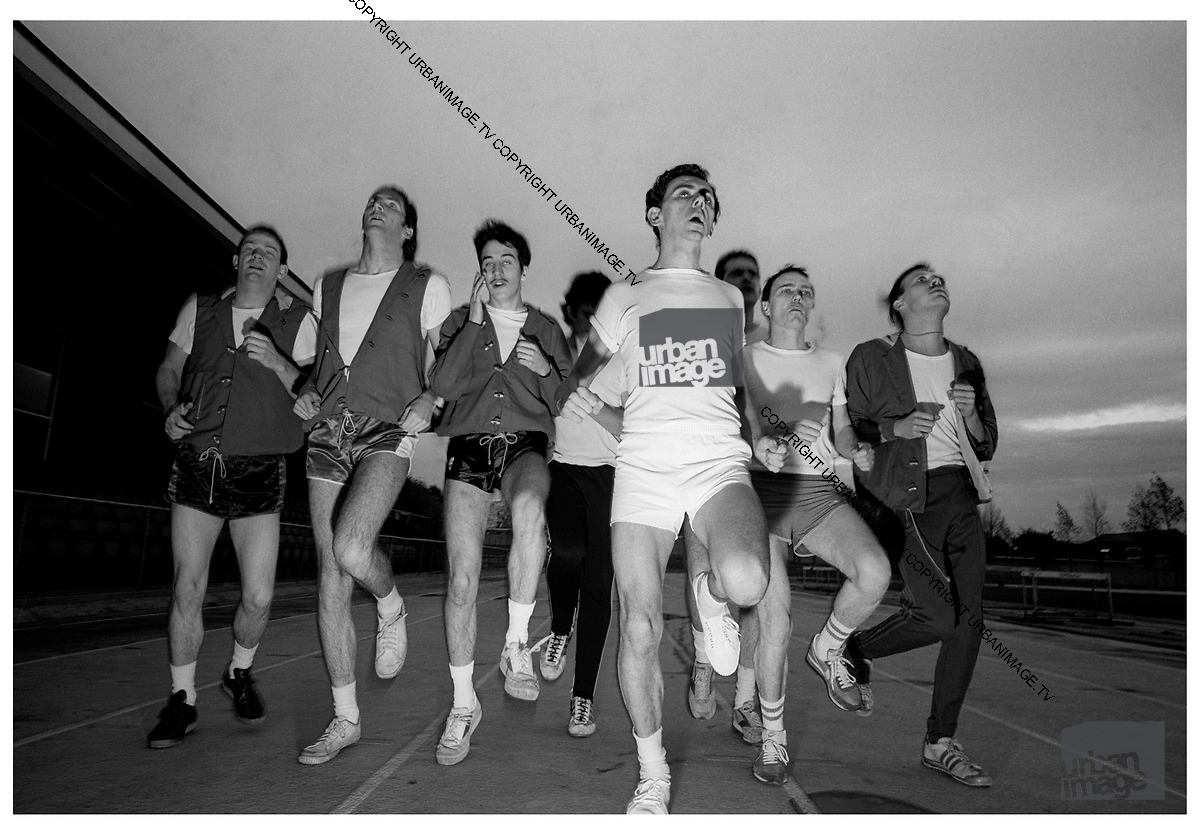
I remember Romo fondly as the last blast of the old-style weekly music press - a scene willed into being, semi-fictionalized, born aloft on the rhetorical efflorescence of its champions
The product of hype in its purest sense - that job we music journos do for the sheer sport of it
The original Romanifesto, penned by Simon Price and Taylor Parkes, is a classic of the genre

Wilde at heart!
This post is titled "the second glam renaissance" because
a/ the first glam renaissance would be the New Romantics and the Bowie-Roxy admirers in New Pop
b/ "renaissance" because Price + Parkes were adamant that Romo was not a revival, it was a renaissance of the ideas and impulses of New Romanticism
so this would be a re-renaissance - another phase in the glam (dis)continuum
^^^^^^^^^^^
What surprised me with each subsequent issue after the Romo Special that got redeposited in the commons by Nothingelseon was the extent to which Melody Maker continued to throw its weight behind the movement, all through late '95 and deep into the following year
There was a MM-sponsored tour of the UK with the leading lights

There was a cassette, Fiddling While Romo Burns...
The big groups on the scene got double-page spread interviews
Also what surprised me was the controversy - Melody Maker's letters page Backlash was full of, well, backlash... Romophobia ran rampant... The bitter back-and-forth raged right through into the spring of '96...
Then there came a proper Backlash, in the form of the Yob Rock issue and subsequent acrimony.
I was in America and missed almost all of this, although I do remember on a visit to UK going to a concert at which three of the most touted Romo groops played... I think it was Dexter and Orlando and another... a group who seemed rather Duran Duran circa Rio... Overall I wasn't swayed as much as I'd have liked. (I do remember being quite taken with Minty and picking up one of their singles or EPs...)
But honestly it hardly matters if the music substantiated the hype... the point was to put the ideas out there, shove them into the mix... and make a Grand Gesture against the laggardly ligging laddishness of post-peak but still dominant Britpop
A bit of context:
The things that Romo defined itself against, rebuked, flashed garish against the dowdy flock included aforementioned Britpop (now in its Bluetones / Cast / Shed Seven / Northern Uproar / Sleeper phase).... there was also still quite a bit of grunge around... and there was the faceless brainfood or footfood of drum & bass, post-rock, IDM, Mille Plateaux...
But there were also what you might call Romo Fellow Travelers - groops not included in the Romo issue but who were also embracing sharpness and image: Pulp (in their ascendancy)... Moloko.... the EZ listening initiative (the Ratpack-homaging Combustible Edison + Mike Flowers in the charts, travestying "Wonderwall")... the mod-ist immodest faction within Britpop: Gene, Menswear.... neo-glam (70s rather than 80s) flickers from Denim and Earl Brutus... sharp-dressed man Ian Svenonious's besuited new groop The Makeup.... old glam gods lurching back into action (David Bowie, Boy George, Mark Almond, Human League) and then right there in middle of pop, accidentally aligned with Romo, there was Babylon Zoo... and poking through towards the end of this phase, the androgynous Placebo
So some kind of rejection of post-grunge and post-Britpop ordinariness was being disparately mounted
Below you will find the first inklings and stirrings of Romo; then the Romo issue itself; a few bits and bobs from the aftermath ... and then the Yob Rock countermove.
ROMO - THE BUILD UP
The first mention of Romo I could find is from June 1995 in this Pricey review which makes Sexus single of the week.


ROMO - THE MELODY MAKER SPECIAL ISSUE


x


ROMO RAGES ON (AND ON)
below just a few of the letters pages and special columns etc - none of the many double-page features on Romo bands, singles of the week, lead album reviews etc etc


By June '96, Romo has petered out, pretty much - making for a year of livening up the pages of the paper, since it was June '95 that Price's made Sexus's "Edenites" Single of the Week
But mere moribundity doesn't stop the Romophobes rallying to give the good-looking corpse a good kicking
For the June 29 1996 issue, MM investigated the phenomenon of "Yob Rock", convening a round table that contains a number of people representing ladpop and ladette-pop but also a rather large contingent of Romo musicians and Romo-writers, who deplore the Loaded-ladded hegemony

There's also a sort of historicising thinkpiece about the yob tradition in British rock by Taylor Parkes

Below, the Yob Rock debate - Orlando members and Romo-in-spirit Placebo singer plus Simon Price critique the ladpop, while Ben Stud + some lad + laddette performers retort that this is elitism and snobbery and stereotypery
I think this is actually the UK music press at its best - purely ideas-oriented and ideals-oriented argumentation - flashbacking to similar debates about e.g. Synths in Pop, or the New Mod, that Sounds convened around the turn of the '80s.
It gets pretty fiery.


Ben Stud: "Romo.... was a comprehensive failure" (from the most acrimonious bit of the exchange)

You might draw some discomfiting conclusions from the fact that in this Lads versus Dandies furore, the women present barely get a word in edgeways.... suggesting that Cavaliers versus Roundheads is just a fratricidal battle within the Patriarchy - Sons versus Sons.
In following weeks the surviving Romos out there bite back at the Yob Champions


- but futilely.
And then Oasis have the front cover for two issues in a row - Loch Lomond and Knebworth

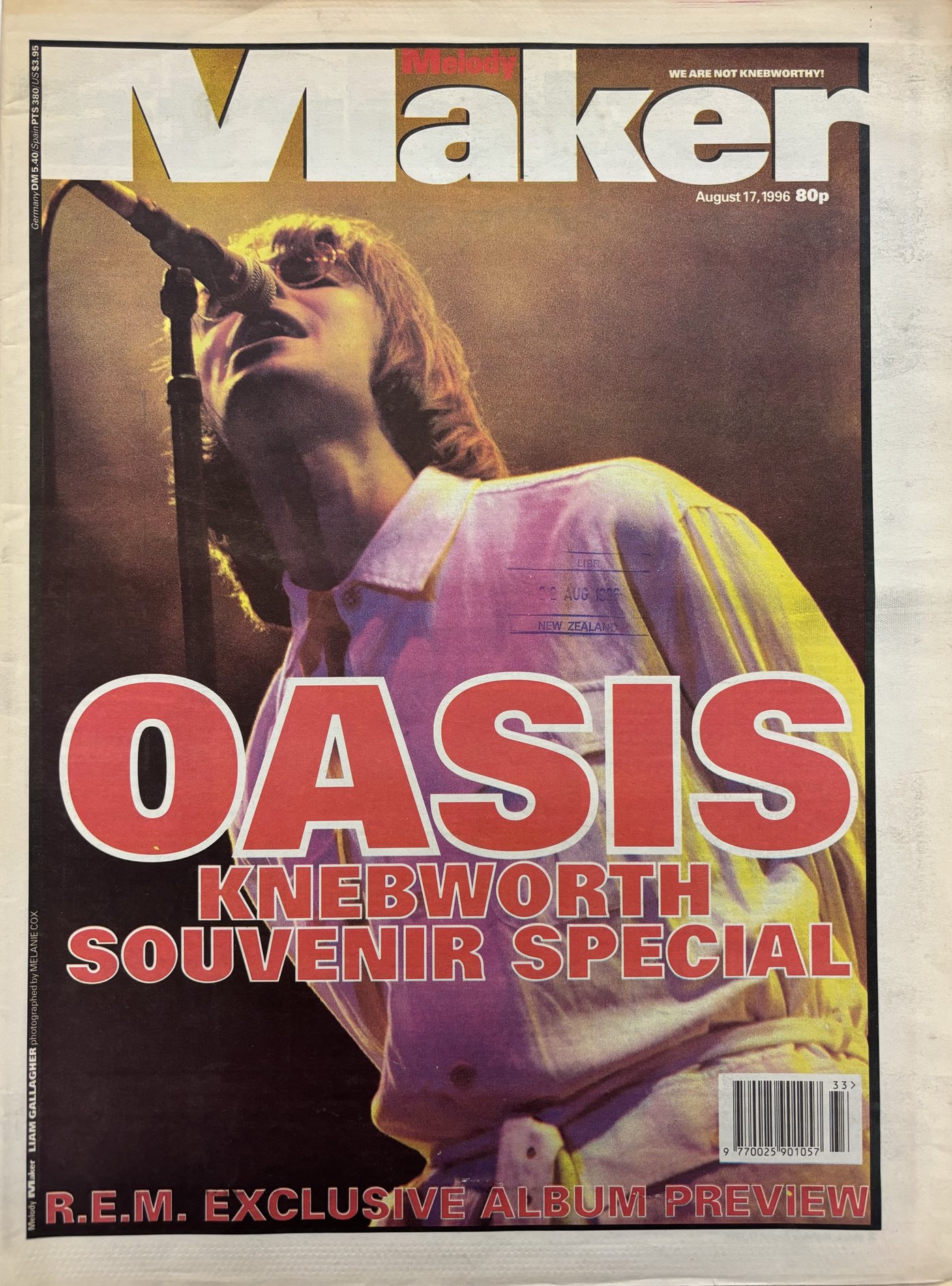
Followed, with a week's interval (Ash) by The Stone Roses
(At Knebworth, John Squire joined Oasis on stage)

And then this!

A brief flicker of Romo-adjacent ambiguity

And then Oasis again!

This cover is the bookend to an early cover from April that year

Ladrock's grim hegemony holds fast
(1996 was really a dead-arsed year when I think back to it - outside of dance music and R&B)
A few diehards don't want to turn the page

August 31 1996
And Price still flies the flag now and then


That's September 1996
But it won't be until electroclash circa 2002 that Romo-ish ideas get back in the ascendant (and even then they don't go mainstream)
The mainstreaming would come with the re-re-renaissance - and it would be female-led - Gaga, La Roux, etc